Track-by-track guide: 'True' by Tenderness

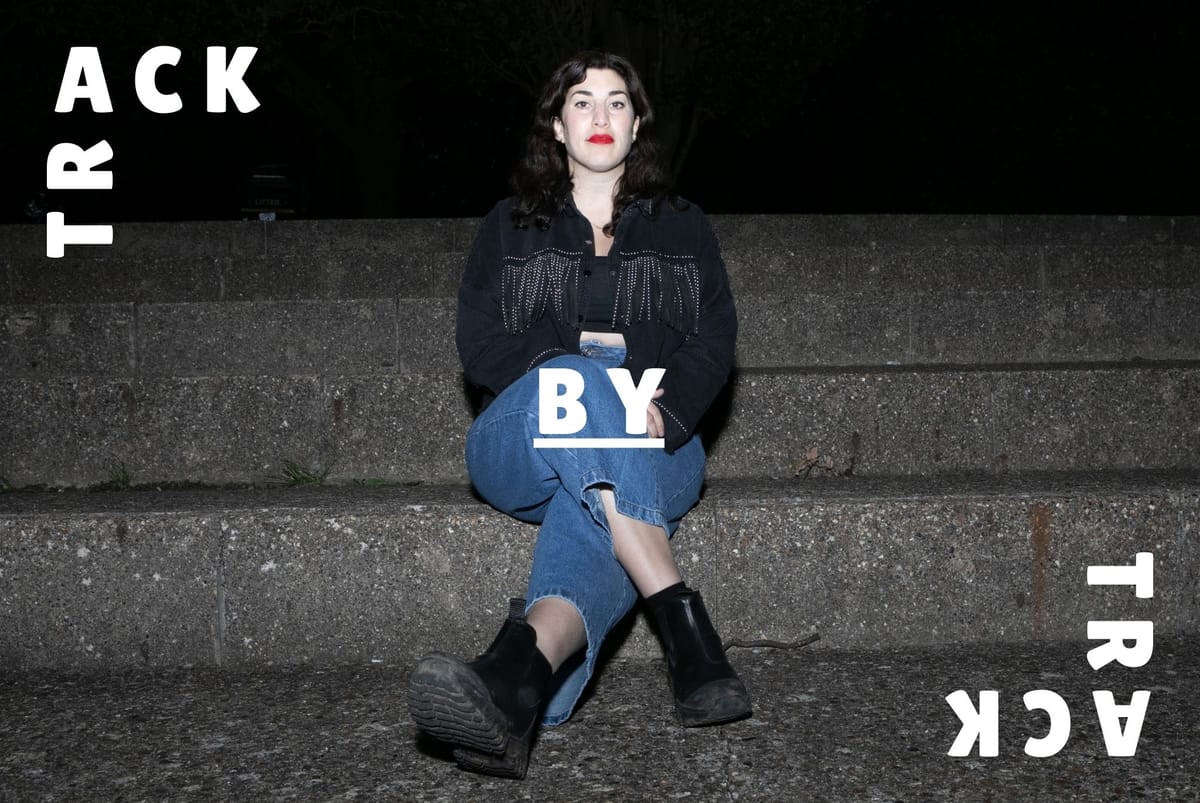
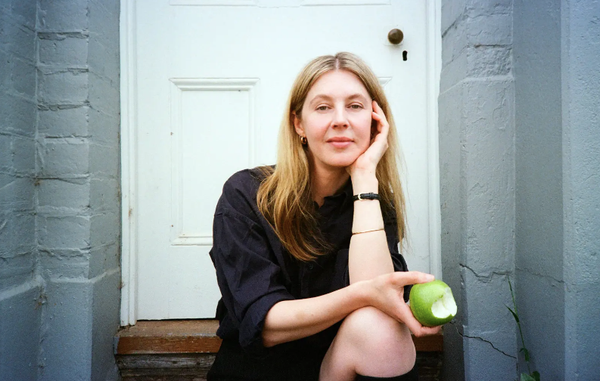
Released in full today, True is the new album from Tenderness, the romantic-pop project from Katy Beth Young. Young has spent the past decade and more as part of both Peggy Sue and the Deep Throat Choir and True is her first full-length solo album. The ten songs here find Young taking a 'sideways' look at love, grief, and technology as she finds them in 2026.
Beautifully constructed and detailed, the album mostly retains a sense of gentility throughout, the swooning nature of the compositions matched by Young's voice, which holds a wholehearted sense of wonder.
Opening track 'Saturday Morning' lays the foundation, brooding quietly into life with a subtle wash of faraway guitar and backing vocals, Young's voice taking a tentative spotlight while allowing all the open space to hold just as much power as the words she sings.
Elsewhere, temperatures do occasionally rise – 'We'll Always Have Paris 1919' is centred around a chugging electric guitar and bright storytelling; 'Heat Wave, Love Song' similarly so – but the overwhelming mood is one of sepia-tinged balladry, and it's where Young excels. Finding various ways and means of presenting such a mood, the results here are always enticing, the songs and world they create as intimate as they are revealing.
To coincide with the release, we're very pleased to share a full track-by-track breakdown of the record, written by Katy. Give the album a spin now and read on below...
Saturday Morning
‘Saturday Morning’ is the first Tenderness song in every way! It was built very slowly on top of one of the original Greenwich demos that Euan Hinshelwood and I recorded in summer 2020, and I think it was the first song that hinted at what Tenderness was going to feel and sound like – probably the moment Euan added his perfect synth part and distorted the bass. Then, Harry Bohay added this timeless pedal steel and we were set. It’s a really gentle love song about the difference between words and actions, which I wrote in my living room on a winter day that felt like summer. There’s beauty and affection in it, plus a little bit of side-eye. The steady rhythmic guitar part was inspired by the Peggy Lee & Benny Goodman duet ‘Where or When?’ and by my friend Benedict Benjamin’s song ‘Petrol’. While we were making the album, it was always the song I wanted to listen to first, so I knew pretty quickly that I wanted it to open the album.
The Salt Flats
‘The Salt Flats’ is a song about trying to hold onto good moments, and how impossible that is. Joy, peace, adoration, they’re all very slippery emotions. The song lives in the moment of gentle panic – the good feeling, already leaving. We tried to build that into the music – a propulsive pulling forwards and backwards at once. A kind of nostalgia. I also had three very clear but pretty contradictory references for the recording: My Girl by The Temptations, Vivid Youth by The Pastels & Tenniscoats, and Weird Little Birthday Girl by Happyness. Each of them is hidden inside the song as a sound or a rhythm, and I think those different ideas and emotions add to the bittersweetness. I finished writing the song in my friend Martha Rose’s apartment in Berlin, so it was really perfect that she and my friends Benjamin Gregory and Dandy Deniz could do the backing vocals – their voices are the melancholy cherry on top.
True
‘True’ is the heart of the album and one of my favourite songs I’ve ever written. It’s a song about the very fine line between love and love songs, between emotion and performance. Everything about it feels very honest and simple - the words and the guitar part and the harmonies by my dear friend and Peggy Sue bandmate Clay Slade. I think that’s why it means so much to me. Often I’ll write most of a song thinking it’s about one thing and then get stuck. I won’t be able to finish it until I’ve understood it more deeply. ‘True’ is about using love for repair and for proof - the verses are me asking to be allowed to do that. But the chorus, which came much later, is me realising that nobody can do that forever. We recorded most of the song live, the vocals, guitar and drums all at once. Marian was drumming in the recording studio and I was out in the hallway in front of the red velvet curtain that keeps the sound of the motorway out. Over the Christmas break, my friend Chloe Kraemer recorded some layers of strings and synths. When I listened to her version I remember feeling, for the first time, like I was making an album.
Touchscreen
The first line of Touchscreen – Our love is a full moon on a touchscreen, we keep trying to share it – was swimming around in my head for a while, before I knew why it resonated so much. Eventually I realised its because it captures the constant push and pull between being a realist and being a romantic, which is what the song became about. There’s hopefulness and idealizations, & signs and symbols, & songs and movie quotes, and then there’s the voice saying - ‘careful, this isn’t real, this isn’t going to work out.’ A lot of the lyrics on the album are about emotional experiences through this lens of technology, because that’s how we live, but so much of that language is quite ugly. I really love the word ‘touchscreen’ though, I think it’s very beautiful and true – it includes both the body and the machine; the person and their absence. When it came to recording it, I wanted the song to feel like it was moving, but not really getting anywhere. The drums, which were played by Olly Joyce, Peggy Sue’s first drummer, and Euan’s country guitar and Harry’s pedal steel, all create that looping road trip feeling I think.
We’ll Always Have Paris 1919
'We’ll Always Have Paris 1919’ is a dedication to my favourite love bomber. Another song that is part romance and part clear-eyed realism. It was originally inspired by seeing my ex boyfriend’s engagement photo online a couple of years after we broke up, and trying not to think about whether it was the same ring he’d shown to me once when we were drunk and in love. Most of the songs on the album are born from those first hints of clarity after some kind of heartbreak. But with this song, I had more distance from the big emotions that inspired it and so it slowly became this perfect, very honest mix of affection and spite and catharsis. There was definitely a heartbroken ballad version and a furious version before it reached its final, sweet and cynical form.
Peacetime
‘Peacetime’ is my apocalypse break-up song. It’s about someone letting you down when you need them most – in this case at the end of the world – and how the screens and telephones are nowhere near enough in those moments. During the pandemic, my friends and I watched a lot of 1990’s natural disaster movies, and there was something deeply comforting in the epicness of them. I expect that contributed to the doomsday setting of Peacetime, beyond the actual doomsday feelings I was definitely having. It’s the only song on the album with full strings, arranged by Chloe Kraemer, and it also has the eerie fake theremin vocal part, which I wrote one evening after watching a video of Clara Rockmore performing ‘The Swan’ about fifty times. It’s strange releasing a pandemic song all these years later, when we’ve all collectively agreed to not really talk about it, but it’s good to have it all memorialised.
Database Blues
Database Blues is the closest I’ve gotten to a straight-up country song. I think I gave myself permission because it’s a country song set in the world of streaming algorithms and re-read text messages. When I wrote it, I was thinking a lot about how technology and romance can feed and battle each other at the same time. Sending a song to a crush is obviously one of life’s purest joys but what does it mean when the algorithm plays it back to you later? Can you still call it a sign? I was an MSN Messenger teenager so there have always been screens in my romances - screens as a connector and amplifier as well as a barrier, and Database Blues is me owning up to my own complicity in that. In some ways it’s a sequel to Touchscreen, which was written when I was a little more misty-eyed. Both songs have the same ingredients – hope, longing, frustration – just in a different order.
Day of Atonement
‘Day of Atonement’ is a bit of an outlier for me in terms of songwriting. It’s more impressionistic because it’s about some parts of myself and my relationships that I struggle to look at squarely, which are experiences around addiction and codependency and care. Usually I start a song from quite a clear and tangible place but because of the feelings at the heart of this one, I had to sort of work my way towards clarity in the chorus. I remember writing the looping guitar part and letting it hypnotise me a little so that I could write over it and make a kind of collage from different images from dreams and images from real life. The final song is both abstract and tangible, in the way that dreams can be. The recording was also layered up in that way with a huge bed of drones by Euan, Jim White-inspired drums from Olly, pedal steel by Harry and improvised, ethereal backing vocals by some of my friends from Deep Throat Choir.
Heat Wave Love Song
‘Heat Wave Love Song’ is a love song set on the hottest day of the year. It was written in the aftermath of a doomed romance, when I was feeling pretty dramatic. It’s about all the ways that love feels like a heat wave – how you can’t read, can’t sleep, can’t get to the end of the movie. How it makes you want to eat honeydew melon, and it slows everything down and surrounds you, and then, how it’s over as quickly as it began. The crucial emotional ingredients are a little longing, a lot of clarity & some vengeance for good luck. The crucial musical ingredients are a decade of listening to Wye Oak, Marian Li-Pino on the drums, my long-time Peggy Sue collaborator Clay Slade on electric guitars and not one but two bass lines by Euan.
Playing ‘Country Roads’
My Dad, Ivor, is a presence and an absence through all of these songs - I wrote most of them on his old Martin guitar that he took travelling with him in his twenties – but Playing ‘Country Roads’ is the one that is most explicitly about missing him. It’s about weird grief rituals: after Dad died in April 2020, mine was learning how to play Mountain Man’s cover of ‘Take Me Home, Country Roads’ and playing it over and over again. It’s also about the way that songs act as vessels of emotion, carrying memory through time. About sending a song as an act of love, and about the terrible feeling of not being about to send one. The recording is built on top of a voice memo of me playing in my living room really soon after I finished writing it, because when we tried to record it properly at the studio, I couldn’t manage it. Luckily, Euan and I both love a strange, lo-fi closing track, so we added some layers of synths and vocals and let it be a moment in time.
Introduction by Tom Johnson
Words by Katy Beth Youngs
'True' is out now, via Amorphous Sounds