In conversation with Charlotte Cornfield
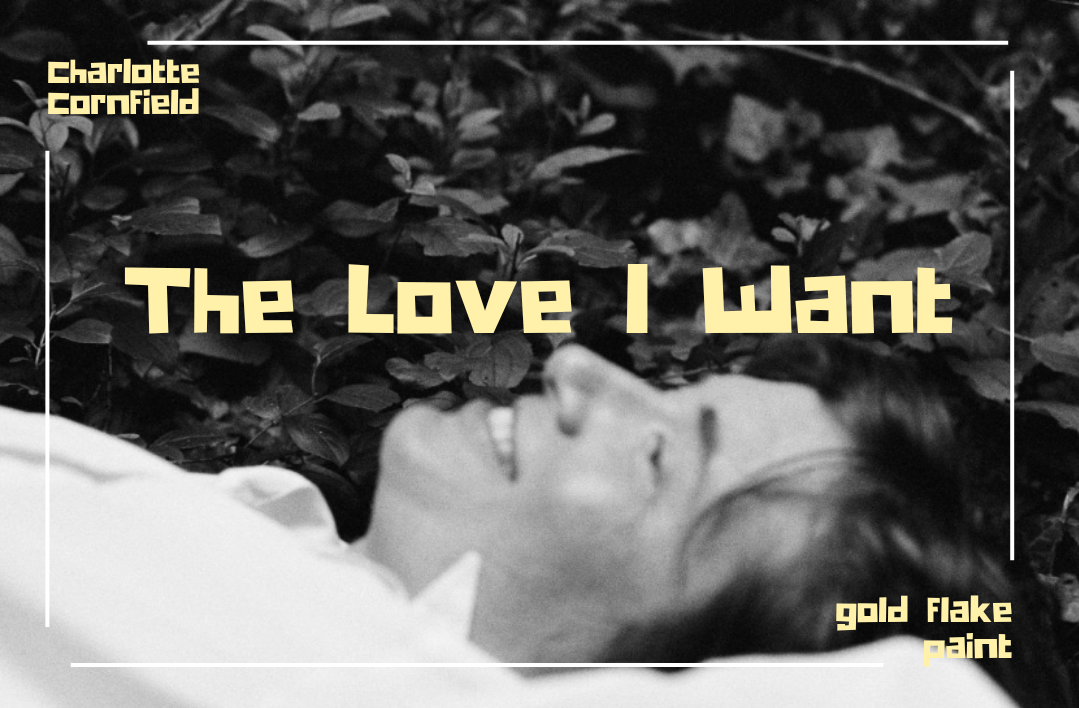
The Love I Want: A conversation with Charlotte Cornfield
Introduction & interview by Tom Johnson
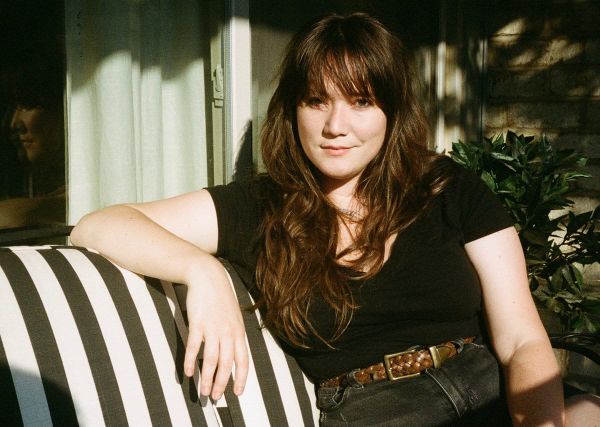
Photography by Sara Melvin
I'd arrived in Cork early, in the whispering undercurrent of a morning, on what felt then like the first day of Autumn. Waiting to be collected from the airport, I noticed my breath in the air, dew on the grass. I remember standing in that fresh, crisp air and closing my eyes, allowing the early sun to sit upon them and wash over the dizziness of early morning travel, departures and arrivals. I’d been awake for hours already and the day was only just beginning; coming to life under a bold blue sky that held a new season at its edges.
Many hours later, as that same day drifted toward midnight, I sat in a hotel lobby alongside a small group of people, experiencing a group of artists share their work in an impromptu songwriter circle. Ben Howard, Angie McMahon, Lisa Hannigan, Leif Vollebekk, Efterklang, Gordi, Memorial; voices I’ve carried with me through many travels and chapters of my life. I sat at the edges and tried to let it all sit upon me, in the same way that morning's crisp sunlight had done; in a way that would let the memory of it all take root and hold.
Those taking part were encouraged – I think, or maybe it just played out that way – to share new work, to nudge the soft edges of their comfort zone, to reach a little further. I’d see this same concept play out in various and often thrilling ways over the following few days. I'd come to realise it was that same impulse and desire that gives the Sounds From A Safe Harbour festival a truly unique shape of its own.
At some point that night, Charlotte Cornfield was passed the guitar, and a new kind of magic fluttered in through the revolving doors. It’s always hard to know if such feelings are conjured only by the individual, but it really did feel like that: a palpable atmosphere quietly filling the space as her performance begun and then held. Magic is one word for it, electricity is another. Maybe you’ve experienced it too, hold the memory of something similar.
Charlotte sang a new, and as it took shape I quickly set my phone at my feet to capture it, knowing immediately I’d want to hold on to a form of this song, in this moment, on this day, longer than I’d be able to with memory alone. I watched it back a number of times since, and the effect is always the same: a small shiver on the back of the neck, a stirring somewhere in my stomach. My time in Cork would be an almost overwhelming mesh of similarly joyous moment, and also varying obstacles and strains. So much life in just a few short days. The months leading up to it had been full of complex change; things lost and found. They all felt drawn to this one performance, somehow. What a strange thing a song can be.
Determined to stay present meant allowing the run-off from all of these things to wrap themselves together, and in that process I found new things and let other things go too. It was my birthday while I was there. I celebrated by traveling out to the coast to swim in the the sea as a rainbow formed above me. The bus that took me back to Cork was missing a window on its ceiling. A few minutes in it began to rain, causing a handful of us to quickly scatter to other parts of the bus as rain poured right through the open space and onto the seat. Life was – literally, in some cases – washing in and out in ways that would only take focus in retrospect. It’s so hard to tell when you′re in it, ’cause it hurts like hell when you′re in it, as the old saying goes.
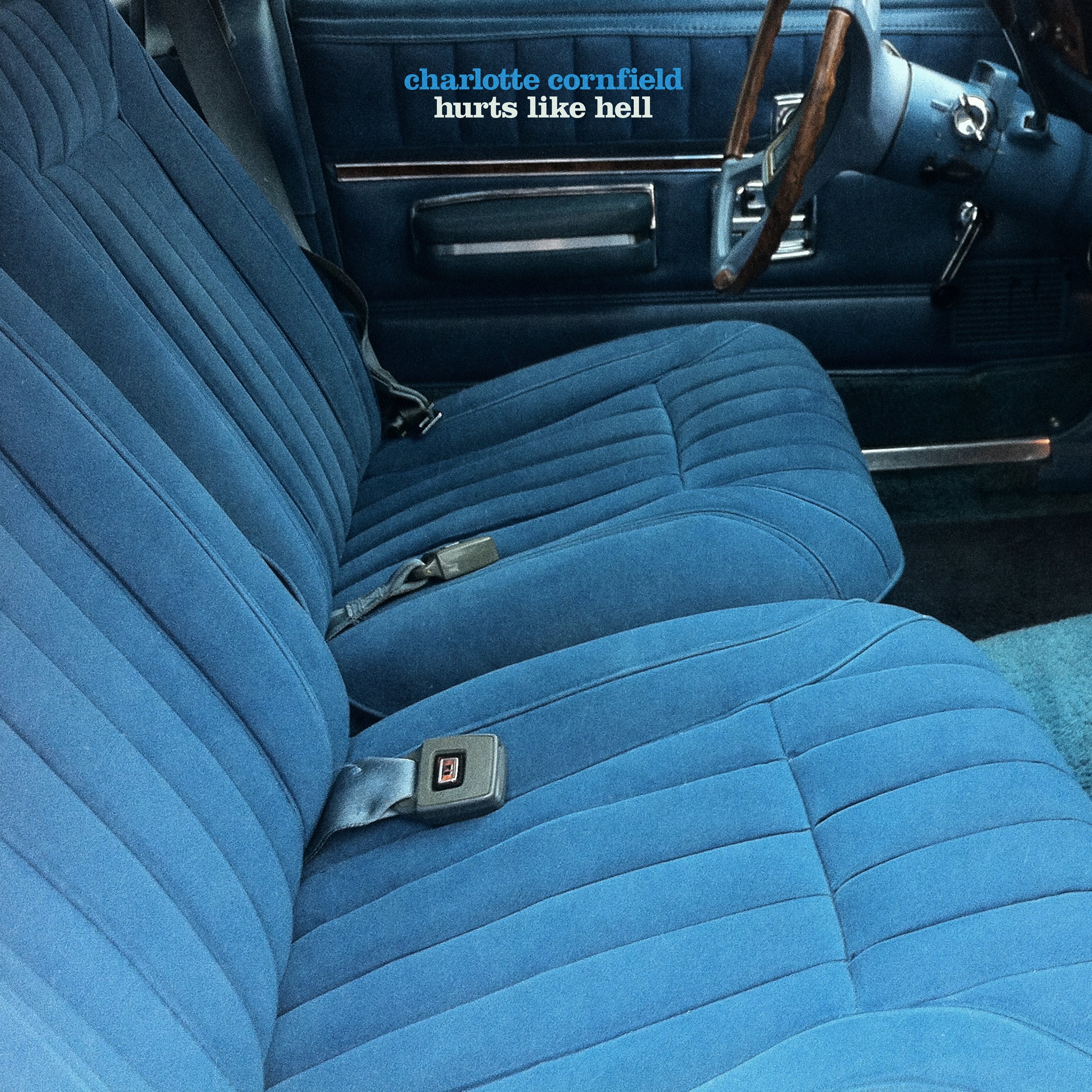
The song that Charlotte sang that night, we’d find out later, would be the lead track from her sixth album, Hurts Like Hell, her first for Merge Records. Now, as it did then, the song paints an evocative snapshot of one moment in one life, and yet manifests itself in a way that feels timeless, universal somehow. Across the album are more songs that do the same, that take the small details of a day, a person, a home, a life and turn them into moments of great presence and importance. Charlotte's work has often been painted with such generous strokes but it's rendered here in a way that feels different somehow, and deeply moving.
Written in the aftermath of becoming a mother for the first time, and recorded in a short-and-sharp six-day stint with producer Philip Weinrobe (Adrianne Lenker, Florist, Tomberlin), Cornfield fleshed out her sound with a band that included Palehound’s El Kempner, Lake Street Dive’s Bridget Kearney, Adam Brisbin and Sean Mullins. Núria Graham added piano, Daniel Pencer saxophone, while a key group of collaborators were also invited in to add vocals: Big Thief’s Buck Meek, Maia Friedman, Sean Mullins of Dirty Projectors, Christian Lee Hutson, and one of Charlotte's musical heroes in Leslie Feist.
Rugged and heartfelt, Hurts Like Hell feels immediately special, that wide-ranging group of collaborators never over-shadowing Charlotte’s own songwriting form; patient and distinct, full of personality, wrapping up characters both real and imagined inside a world that has shifted immeasurably for its creator over the past couple of years. Love in all forms.
Below, Charlotte speaks to that boundless change, the ways in which she pushed herself to go further, and the support systems around her that led to the creation of such a powerful and poignant body of work.
GFP: How did the path to this release differ from the Could Have Done Anything chapter?
Charlotte Cornfield: Well when I made that record, I immediately found out I was pregnant, but I just decided to keep everything on schedule, for better or worse. It meant that the weeks leading up to the release and the immediate couple of months after, I wasn't able to do any of the stuff you do when putting out a record. So it's been really different this time. Leaning into the release, being able to be fully present, being able to do in-stores on release week, and have shows right away. I'm really excited to capture the heat of the record right off the bat this time.
Going into making this record was just a different experience. There were limitations that led to me feeling a lot more free. There was the limitation of having less time to write, meaning I had to be very deliberate about my writing, which led to different things coming out. Then there's the limitation of Phil Weinrobe’s way of working, which is to have everybody off the headphones, with no listening back to anything, and everything done live. There was no checking to make sure things sounded right. In those limitations, I found a real freedom.
GFP: Had you worked in that way before, and was it a surprise to find a freedom in those limitations?
CC: I knew that I didn't like paying a ton of attention to the technical stuff, or even having my time taken up with that. But I didn't know that I would be able to make the record that I wanted to make in this way. It was very cool to discover that it was possible. I don't know what I'm gonna do for the next thing, but I really did have, I think, the most fun I've ever had making a record. So that's something I'm taking with me, for sure.
GFP: What did the day-to-day look like in the studio, and how did the relationship come together in the first place?
CC: Well everyone was together, and we all put our phones away. Phil has a thing called 'phone jail', so our phones were locked up while working. We would work 10-6 each day. We'd order lunch and all eat together. It's Phil's way of facilitating an experience, he brings a lot of joy and good energy to things, he's very present in that way. I think that led to this unlocking, where everybody was just really happy to be there, and seemed excited about the music. We were put in a really good state to create from.
In terms of me and Phil, I've been a fan of his for a while, and the records that he's made. I never took part, but around the pandemic he started his 'song a day' practice, which so many people I know got involved in and raved about. So I knew him to be a creative facilitator. He reached out to me around my last record to say that he liked it, and when I said I was a big fan he was like "well, let's make a record together!". It took a bit of planning, but I was very sure about it. There's always people that I want to work with, but them being enthusiastic is a big part of it, too. And he was so excited about it, so it was a no-brainer.
GFP: As an outside-listener, the songs on Hurts Like Hell feel subtly different to what's come before. I was wondering if you could talk to that, in terms of your processes and how you view these songs now?
CC: I would agree. I think there's a playfulness to the writing on this record that feels new. Part of that is to do with being pulled out of myself, spending a ton of time with a little being who's seeing the world for the first time. That's led me to want to revisit things, and also invent things and have fun with the process in a different way.
All of it felt more free than in the past, in terms of patterns I used before, in terms of structure. I never went in with a strict idea of what I wanted to do, so there was an openness there. I'd start from somewhere and just see where it took me. There was a big sense of letting go – which I think is a big part of being a parent too. You have to let go, and let things happen, and be adaptable. I think I brought some of that into the writing too.
GFP: I love how many small details are in these songs; a hose dripping, wine in the fridge, lines on a ceiling, specific places that you're sitting. Can you talk a little to that side of your writing?
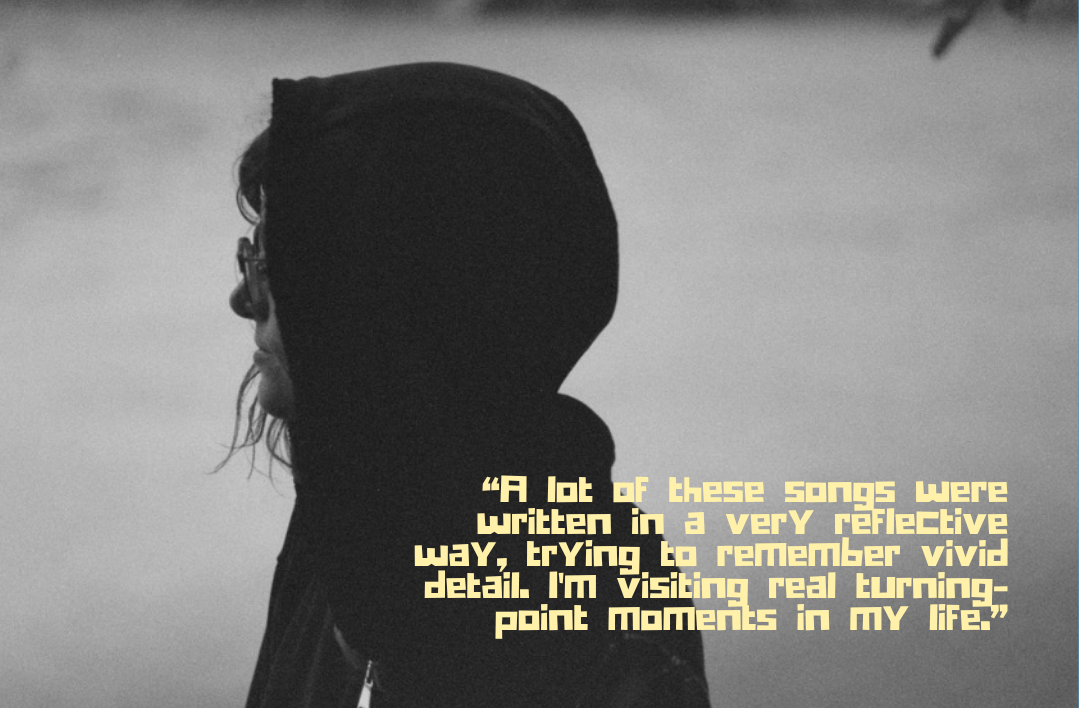
CC: A lot of these songs were written in a very reflective way, trying to remember things in really vivid detail. Or, if they weren't drawn from memory, then trying to write stories or little snippets with as much detail as possible, because those are the types of things that I focus on when I think about a situation. If I'm trying to remember something, I’ll pull up all the visuals of it, all the different aspects of it.
So there's a ton of those on this record, and also some specific periods of time that are referenced in the songs. There's my coming-of-age in Montreal, which specifically the song ‘Long Game’ touches on, and then ‘Squiddd’ is based between Montreal and New York. There's a lot of geography in the record.
I feel like the songs that are drawn from me, are ones where I'm visiting real turning-point moments in my life and really trying to embody the stories. Then there are some songs that are pulled from elsewhere, and I had a lot of fun with those too.
GFP: You've talked a little about those "fictional" songs. How did you find that process and what led to you writing in that way for the first time?
CC: This is the first time I've really let myself inhabit completely different characters, and not have the songs be perceived as coming from me. Whether people see it as that or not, I’d always been putting pressure on myself to write from my own life. Allowing myself to not only do that was very freeing.
I was finding that I had the impulse to write songs after being moved by films, TV, and books. So, for the first time, I just let myself write from outside of myself. I'd also read a couple of memoirs from Jeff Tweedy and Lucinda Williams that helped. In Lucinda’s, in particular, she's very generous about what she wrote the songs about, what she invented and what she didn’t. It was good to find out that one of my favourite songwriters of all time was taking complete liberties with everything.
GFP: You've also talked about singing in a slightly different register on these songs than you naturally would. How does that manifest itself in the songs?
CC: I have a real comfort zone when singing. It's a lower range, so I write a lot in the key of C. Could Have Done Anything is a record that's written in C, and it's very natural to me to sing that register. In the process of making this record, Phil pushed me to sing higher. I had this idea in my head that I'm not comfortable singing high, but as soon as we tried things out, as soon as I got up there, I realised I was accessing a different emotion than I had before. It gave the songs a buoyant lift that I really appreciated. It was really cool to push myself in that way–some of the keys are pushed way, way higher than I thought they ever could be.
There's a thrill, I think, that comes from accessing something new in that way. I remember it specifically with ‘Long Game’. We'd recorded a version of that song in the original key I'd written it in, then, at the end of the day after everyone was gone, Phil pulled me aside and said, 'What if we take a stab at this again, but we go higher and faster?'. We tried a couple of different keys before we hit the key that we chose in the end, and right away it was so clear that it was where the song needed to live.
GFP: Was there a lot of push-and-pull with these songs, in that respect?
CC: Yeah there was. Previously, I always thought that before I shared a song, it needed to be complete, but Phil was very clear with me about sharing things before we got in the studio. He wanted voice memos, and said it could literally be a 10-second idea. Just being able to send an idea and have somebody say, 'I love this, go with it' is something else I found to be very freeing.
It was really helpful to have his ears throughout the process. There were songs that I thought we would use, that we didn't end up using, and I really appreciated Phil's honesty on those. There was one song where I realised how important it is to get out of my own echo chamber. I’d convinced myself it was solid, but when I played it in the studio after we had finished a bunch of other songs, Phil looked in and I said, 'I found myself drifting while you were singing that'. I so appreciated that, because that's exactly what I don't want. I found that kind of feedback super helpful. I haven't had that specific kind of feedback before.
GFP: Did the rest of the band have influence in that same way?
CC: I think everybody brought that same level of openness, yeah. There were no bad ideas. It felt like a space where everybody could share an idea, and everybody's thoughts were taken into consideration equally. I felt like I had to have the kind of relationship with Phil, where if he had an idea that I didn't quite resonate with, I'd be fine with saying let’s try something else, and he was also very receptive to my ideas.
All the musicians brought such cool ideas and energy, and everyone on this record is really different, too. Bridget Kearney is an amazing upright bass player. We didn't even realise we were gonna have upright on the record, but then Bridget was there and she crushes that instrument, and some songs really lent themselves to it. Sean Mullins is such a groovy drummer, and Adam's a really inventive guitar and pedal steel player, he creates these huge sonic worlds. And then El… I so, so loved having El on this record. I'm a huge fan of their band Palehound, and also I felt like they were the person who was meeting me with a love of indie rock and big hooks. They're an amazing guitarist, but they also have a huge knack for hooks and melody. It really was such a cool group of people.
GFP: There are also a key group of guest singers on the album, how did that play out?
CC: In the past, I would say that I've been pretty shy about reaching out to people, but Phil is not that! It worked out really well to be working with somebody who says ‘If you have an idea go for it. If someone can't do it, then cool’. Maia Friedman, who sang on Kitchen, is actually Phil's partner but I was a fan of hers before all this, through Dirty Projectors and her own project. I knew that I wanted to have her sing on something, and then after the session I was listening back to ‘Kitchen' and felt like she could really give that song a beautiful lift – and she did. She's such an incredible singer.
I actually didn’t really know Buck, and I still haven't really met Buck properly! I was sat down with Phil one day listening to ‘Hurts Like Hell’, and he immediately hit pause and said, 'We need Buck to sing on this, and we need him on it now.' Buck happened to be in New York at the time, so Phil was trying to get him to come to the studio, but it wasn't good timing. He ended up doing it from his place in Topanga, so we still don't really know each other, but I'm a huge fan. I love his new record.
Christian Lee Hutson, similarly, I've been a fan of his for a while. I think it was an Instagram thing, where we follow each other. He sent me a nice note and said if I ever needed any vocals or guitars on anything to reach out, and I just banked it. And then again, after the session, I was listening back and wanted someone to sing ‘Number’ and thought he'd be perfect for it. And he was, and then Phil got him to sing on ‘Lost Leader’ too, which was really cool.
GFP: And then there's Feist...
CC: And then there's Leslie! I still cannot believe that happened. Coming from Toronto, in the era that I did, Leslie is an absolutely unparalleled artist to me. We have some mutual friends, and we'd met a few years ago and started chatting a little bit. When Phil and I were making the decisions about who we were gonna ask to sing on the record, I just mentioned that it would be so cool to get Leslie. I knew that the two of them were friends too. I would have been too nervous to ask her to sing, but thanks to Phil's fearlessness, we did.
And then we both immediately thought she would be too busy, and have a ton of stuff going on, and she's got a kid…so I put the phone down and mostly parked the idea. And then Phil called me an hour later and said, 'I asked Leslie, and she's into it'. She wanted to hear a couple of different song options to choose from. So I sent her two, secretly hoping that ‘Living With It’ would be the winner, because that's the song that's most inspired by her music, and that’s what she chose. I'm still completely touched and moved that she sang on that song.
GFP: I wanted to ask you specifically about the song 'Kitchen', because it was one of those moments that totally stopped me in my tracks when I was listening to the record for the first time.
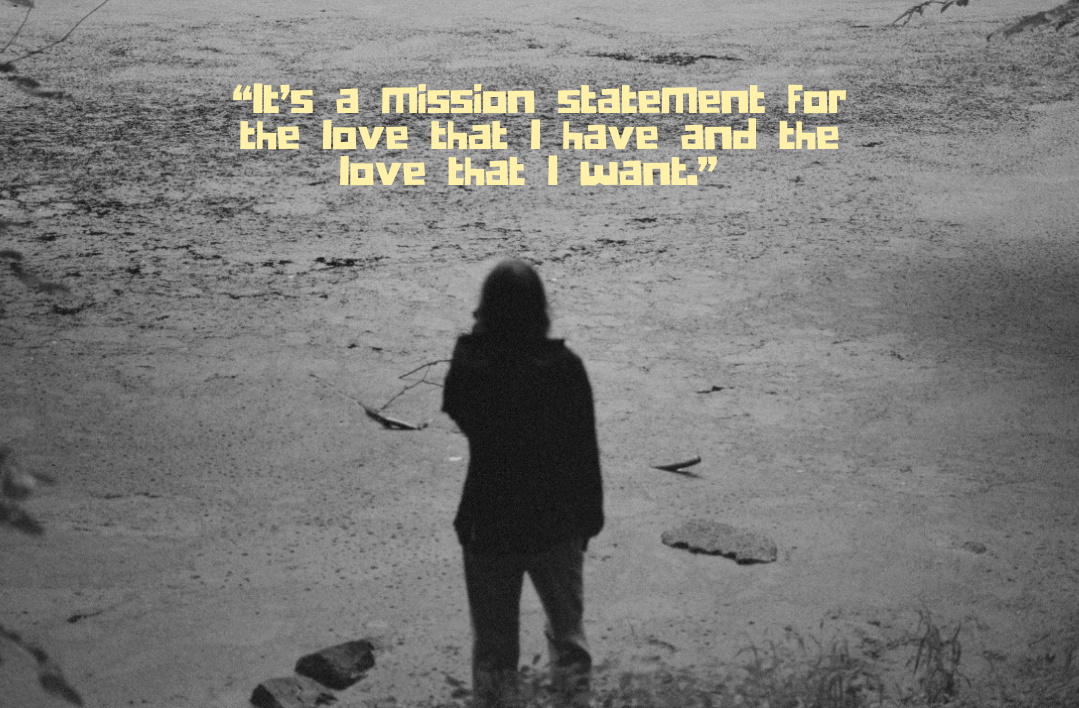
CC: That's the one song where I still sometimes cry when I sing it. It's a love song that's very personal to me. I honed in on these few specific moments that could feel, on paper, to be not that important, but it's the small details that I find very powerful to work with. It was also one of those songs where the chorus was just suddenly right there. It was one of those really exciting moments in songwriting, where you surprise yourself with something that you didn't know was going to be there. 'Kitchen' was one of those moments. It’s a mission statement for the love that I have and the love that I want.
GFP: You're 15 years into your career now, and you've signed to Merge for this album, and it feels, to me, like you've climbed the ladder a little higher again. I wondered how much attention you pay to those things and what you take from them?
CC: It's funny. I've always been self-managed, and sometimes I’ll speak to another artist and find out that all of these details that I'm constantly talking about, they don't pay attention to any of them. I would love that! I probably know more than I want to know about all the behind the scenes stuff, but I am really grateful that this journey has been a slow-burn. There haven't been many peaks and valleys, it's mostly just been that each record has had a few more people listening.
This one feels the same, and I feel very welcomed by this community that I'm in, and very supported. Also now that I’m a parent, to have this be something like a sustainable career is something I'm really grateful for, from a practical standpoint. Overall, it has been really cool to slowly reach more people. I feel very grateful for all of it.
GFP: I remember speaking to you when we were in Cork, about navigating motherhood with being an artist, and one that travels especially. If you don't mind talking about it, how are you finding that balance now that you're in the middle of the album campaign? And how is life as a mother treating you?
CC: Being a mother has completely reoriented me. It is very challenging to figure out a balance alongside this. One of the reasons I'm able to do it at all is that my parents, and my partner's parents, are hugely supportive. We have a lot of family support around childcare, so I know that if I'm not there, my kid is either with a loved-one or her other parent, and that's a huge part of why this feels doable.
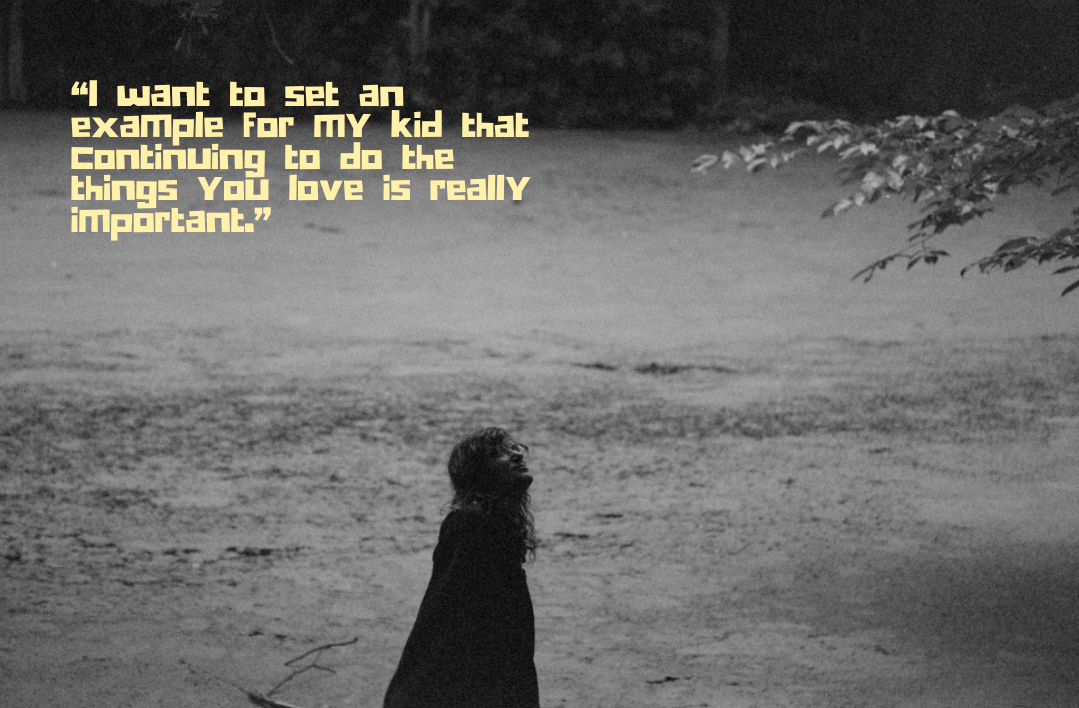
I am still constantly coming up against my own challenges though; what my limitations are around being away; what the longest time away I'm comfortable with is. I feel so supported by my partner, and by everybody in my life, but it still breaks my heart to be away. Even in this moment that we're talking, I'm aware that I’ve been really on-the-go with the album release, and I feel distracted from my parental duties. I'm also aware that it's temporary, and that I want to set an example for my kid that continuing to do the things you love is really important.
I think we all have our challenges with that. Balance for anybody in life is hard, but it's made certain decisions a lot easier. Things are an easier ‘yes or no’ now. Previously, if a tour was going to end in LA, I might stick around for a couple of days. With this upcoming tour I'm flying home at 7.30 a.m. the day after the show, and that clarity is actually really helpful. Again, it’s the ‘freedom in the limitation’ thing; certain things are very clear because of their limitations. I thrive on routine, and the routine of being a parent and partner, of our little family unit, has been hugely stabilising for me. Having that be the main priority and then slotting everything else around it is an orientation that feels right to me.
GFP: We're six months out from our time in Cork at Sounds From A Safe Harbour, and I'm still thinking about that experience a lot. I have such a vivid memory of you singing Hurts Like Hell in the hotel there, and also just everything that goes into, and comes out of, that festival. How do you look back on your time there?
CC: What an incredible gift that experience was – and shout-out Mary Hickson for putting it all together. I was so incredibly grateful to be there, for every minute of it. I took so much joy out of doing so much collaborating with people. When I'm at home I'm often focussed on my own project, so I'm not always in the mood to hop on drums with someone, and then hop on bass with someone else. The final day there, I can't remember how many shows I was part of, but it was so many! It was really fun, just bouncing from one thing to the next. It was good to remember what a happy place that is for me, and how much I love being invited to collaborate with other people.
The Pagan Rave ceremony was also a real standout for me. Being able to wear a costume and play a floor-tom, in this moment of elation, in what felt like a very political event in Ireland, was very special. To experience that, and feel that, was so unique and so cool. I met so many incredible people. The whole experience was a gift, and I'm still holding onto it.
Hurts Like Hell is out now, via Merge Records
Buy/stream on Bandcamp
 0
0