From the gloaming: A conversation with Hana Stretton

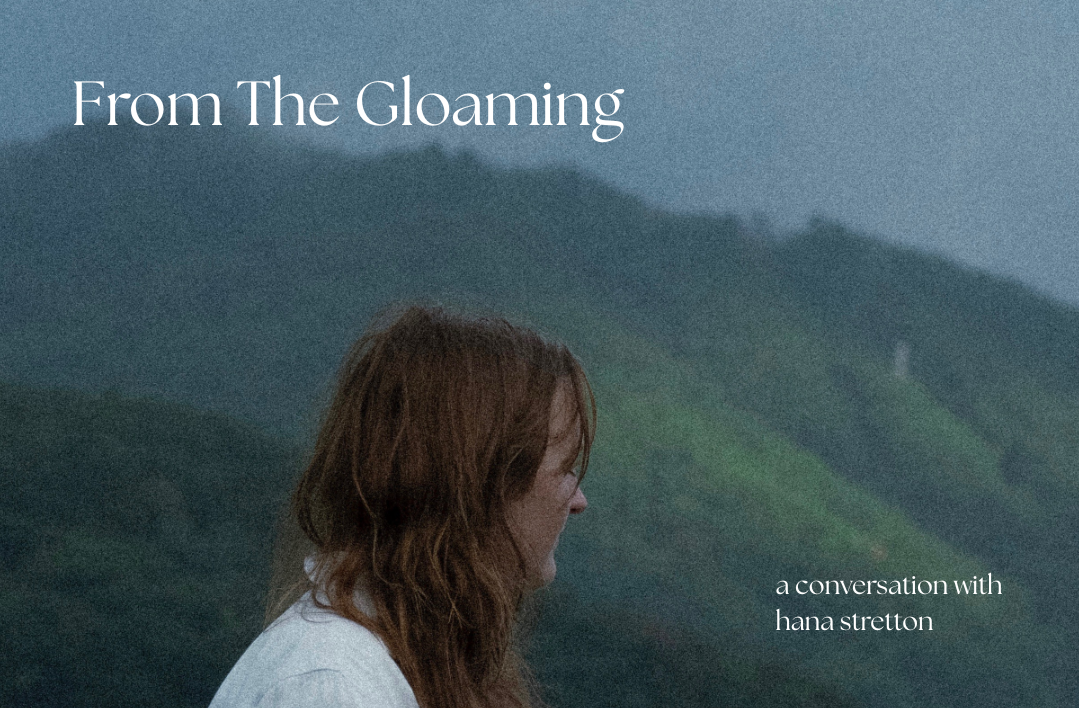
words & interview by tom johnson
Attached to a petrol station in Lake Tabourie, a small village in New South Wales, Australia, Tucker Box is a small food stop that serves the equally small community. Though it’s been in business for a number of years now, it has just two reviews on Tripadvisor: a five-star rating balanced by a one-star rating to form a distinctly average meeting point. According to the most recent census, Lake Tabourie has a population of 689 people, a slight increase of some thirty people from the five years previous.
It was here, in the outer edges of this outer-edged place, that Hana Stretton found herself returning to, making a small, rustic home studio near the beach for a few solitary, back-to-back winters. She walked the deserted beach, where whales swam out in the channel, passing by in their thousands. She swam in the sea as the light disappeared, watching the day fade out and and the night fade in from the waves. At the end of it all she wrote, recorded and shaped new pieces of music, working away into the long dark nights that held her in place.
It was an isolated and fragmented time, a reaction to many things: the gentle but sustained success of her previous album, Soon, and the touring that followed. But also the flailing nature of the world, one of wildfires and our broken climate; pandemics and lockdowns; the slow-creeping realisation that all the learning we should be holding on to is being quickly washed away once more. “Soon was made during a time where I was witnessing firsthand these destructive futures that the world holds,” Hana tells me when we meet across our respective screens to discuss the brand new album she made during those days.
“I actually came out of that time with a lot of love, and a feeling of joy to be alive. That was my initial response to it all. Once the smoke cleared, I just felt really happy to be able to make anything at all. There was an aloneness during that time that had been very sustaining,” she continues. “But then I got a phone, and I got the internet again, and I came back into the world like a screaming kid that didn't want to go.”
In many ways, those repeated seasonal trips to Lake Tabourie were a further reaction, a seeking out of that ‘aloneness’ she’d previously felt held by, and a desire for a physical place she could sit with the anger she was feeling for the state of the world. The task became an attempt to try and shape those heavy, blueish sentiments into something greater than the sum of their knotted, increasingly uncomfortable parts.
“I think some of that anger definitely started to come through,” she expands. “I felt very aware of the world not really changing how we needed it to. After COVID, especially, it felt very obvious that we really, really need to help the planet, but seeing how quickly we just went back to quote-unquote normal… I think I just became a little bit more in pain with it all. Tiarn was made through that state.”
Tiarn – released last week – is Stretton’s second full-length album, another meandering and exquisitely imperfect collection of songs that were shaped and sculpted in the quiet spaces between said upheaval. It was recorded in the strange blue light between night and day – the gloaming, as we call it here in Scotland – and the songs take on that same peculiar hue; colours drifting in blemished air, conjuring feelings that are somehow both weighty and weightless, depending how much significance you place into such things.
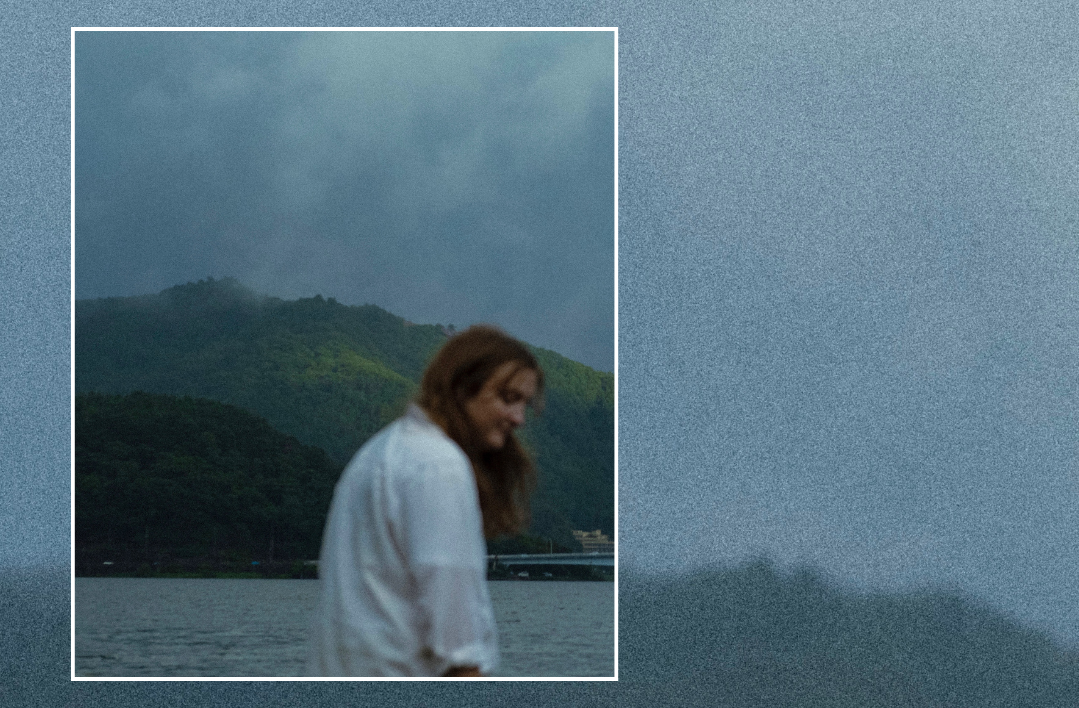
When we talk, it’s just a few days ahead of the album’s August 7th release, and I find Hana living in France for the summer. Though the day before she’d had a chance to do some gardening, she tells me she’s mostly been sheltering from the searing temperatures that have plagued Europe for most of the season, while keeping half an eye on the wildfires that are still raging only a couple of hours away. “I’m hoping they don’t get too close. I think we’re fine,” she says. “I mean, what can you even say?”
We move on by returning to Lake Tabourie, the album’s place of origin on the other side of the world. Over three winters Hana traveled there with just a handful of instruments, setting herself up with a keyboard, a small harp, and a cello. She also had a “shitty mic”, she tells me, and an old interface that would break all the time but she didn’t want to replace, stubbornly holding onto these pieces she’s collected over the years as a way of embracing the earthy nature of it all. She set herself up in the lounge and kitchen area and went to work amid the quietness. “I think at this point in my life isolation is the only way I can really make music,” she says.
If anger was bubbling away in Hana at the start of the album process, the fallout was diluted over time. The album itself feels soft and warm, laced with nostalgia, full of intrigue and wonder. The folk-led ambience of its predecessor finds new ways to captivate, to stir something ambiguous, and the addition of a choir focuses the hazier parts. Glimpses of magic are pulled from the blue air.
“I was very angry with humans, very angry with how we were treating the world,” Hana reflects of those origin days, “ but through the making of Tiarn, I was able to soften. The music itself was helping me move through that. I wouldn’t call it peace, but I came to a kind of equilibrium where I didn't hate people anymore. I could join the world in a more loving way. I feel very grateful for that.”
That equilibrium was something nuanced and also physical, those quiet winters on the edge of the world (im)balanced by a lot of time spent touring the world in support of Soon’s growing success. The album found a host of fans through slow-burn, word-of-mouth fortune. Perhaps its most notable admirer was Phil Elverum of Mount Eerie/The Microphones, who was so enamoured with the recordings that he pressed Soon to vinyl via his own record label, further enhancing the LP’s reputation, extending the legs of it all. “I find touring really difficult,” Hana admits. “Being a ‘performer’ can be so awful and strange and I think it’s psychically destructive for me. So I found that whole time really hard, honestly, but it was also so great and so beautiful. I got to fulfil some dreams, like performing with Mount Eerie. I’m really very grateful for it all.”
At some point during those undulating months and years, between what came before and where we are now, Hana unearthed some old family videos, taken by her parents during the time they spent in Japan, before Hana was born. Something about the light, the movement, the shadows, moved Hana deeply. She’d already begun sketching ideas for Tiarn, but the visuals of these old recordings brought things together, forming an overarching theme that began to thread its way through her new work.
“Those videos of my family were really helpful in terms of getting closer to the world that I wanted to create,” Hana explains. “I had a visual understanding of the album I wanted to make, but then I saw those videos for the first time and, in a strange, kind of scary way, they matched pretty much exactly the image I had in my head. I dragged them into Ableton and started making the music directly to the sound of that,” she adds. “All of the field recordings you hear on the album are taken from the actual video itself.”
Perhaps the most indicative moment of this discovery is ‘stove’, one the two songs Hana shared to accompany the album’s release. Dream-like and enchanted, the song blends subtle washes of synth with a striking, looped vocal that quietly transfixes. It was written on a set of Yamaha keys, a large synth that her parents bought in Japan and had shipped back to Australia. Hana dug it out of storage in 2023 and began playing with it. “When I found it in storage, it had a sticker on it that said ‘store’,” Hana explains. “When my parents moved from Tokyo to Australia, they had to tell the movers what was going to storage and what was going to the house. It still had that sticker on it, and my Mum writes her Rs like Vs, so that's why the song's called Stove. It's named after the keyboard that has ‘store’ written on it.
Such personal details flitter through the album like puzzle pieces, jaunty shapes smoothed at their edges to form a larger image, one that might not always be whole, but is at least wedded, tangible.
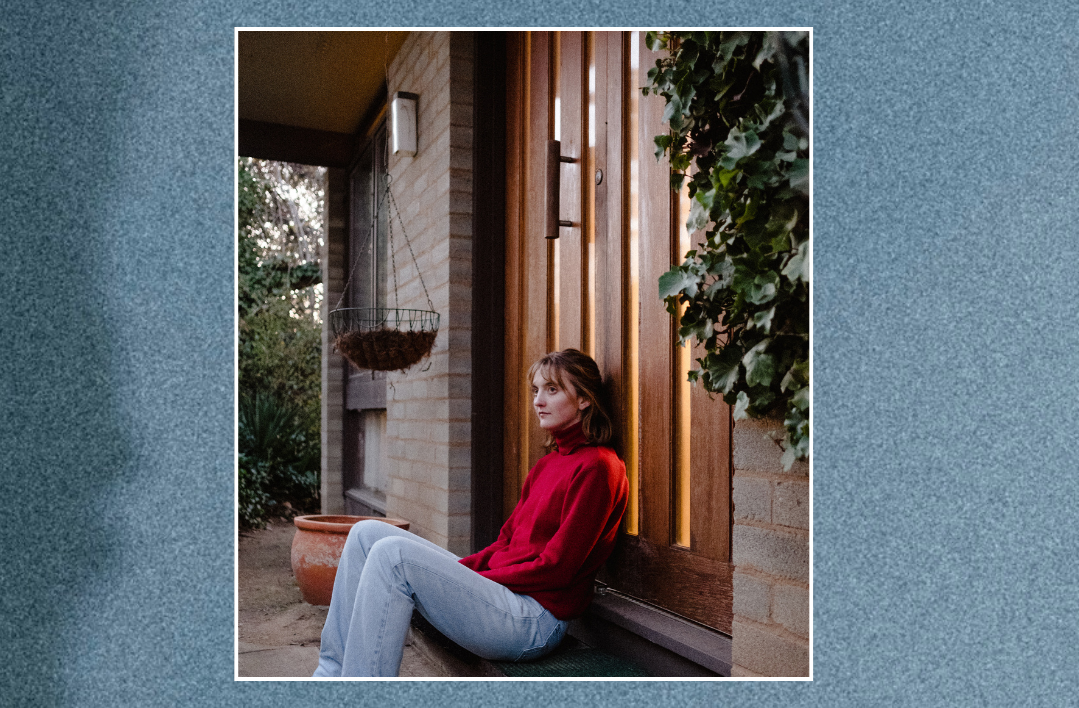
Tiarn's opening track ‘Nojiri 1993’ encapsulates the album’s heart, a slow, aching wave of instrumentation rolls gently on, interspersed by foreign whispers, an occasional voice that hovers in on the breeze, the creeks of a chair; elements that shrink time and distance and other things too. Soon was a daytime record, Hana herself says, but she meant for Tiarn to be ‘night music’, and it reveals itself in that way; in the twilight gaps of a strange new city quietly coming alive; of whales moving silently out to sea as the horizon smudges the whole thing together.
“I believe in making music at the right time of day,” Hana says of that thinking. “I would swim as it began to get dark and then I would make music at night, and it mostly all came together that way. Some of the songs I ended up making during the day though, and you can hear the daytime in them, but that was a mistake,” she adds. "I don't like my peas touching my potatoes! I like a really cohesive album, but I also don't want to punish myself too much. If I'm feeling really creative at 2pm then I don't want to shut that down. So I guess the album gets to have a little bit of everything. But it was made for the night.”
We often think of the night as a lonesome place, and it certainly feels that way through Tiarn’s quieter moments. Hana’s voice, always used sparingly, held somewhere just out of view, retains the somewhat solemn, distant shape that it did across much of Soon. It’s a beautiful instrument but the way it’s used is full of idiosyncrasies. It often feels like it’s hiding; perhaps asking you to follow it into the shadows before disappearing once again.
“I'll go for long stretches without using my voice at all, whether it's singing or talking,” Hana says regarding the relationship she has with her voice. “Sometimes the presence of it feels abrasive to me, so I'll bury it most of the time. Unless I have something I really want to say. I don't know how my relationship with words and voice will change over time,” she continues, “but I have a sense that I’ll probably be using even less of it in the future and focusing on more instrumental music.”
If there are moments on the record that bring the music out into a more colourful world – for the listener at least – it’s when layers of voices come together to sing. In spite of the isolation it took to form the spine of Tiarn, its heart is in connection. Indeed, the album’s press release says that the songs here ‘move with an ever-present longing for connection’, and it’s that weighty sentiment that is ever-present, a clawing for parts lost. “The music made me get out of the house and meet people. It was asking for lots of hands and feet and voices,” Hana says. So I had to go and find them.”
That journeying led her to the Castlemaine choir, a collective Hana performed with for a special live show at a festival before forming a bond that was folded into the timbre of Tiarn. “I'm so glad I found them because, as I was saying before, it softened my frustrations with the world, with people,” she explains. “I met really, really beautiful people, who felt really similarly to me, and through that I learned what it was like to be in a really thriving community. I’m really grateful to them for helping me see that. And I’ll continue to work with them, it’s been a beautiful thing.”
That connection is perhaps a reaction, if not an antidote to the aloneness she was so held by when she first began working on these songs, but that softening that came through the music has revealed itself in other ways too, ways that have subtly begun to change the shape of her life outside of music. “I think I learned, after five or six years of being alone, and always being very kind of confident in my aloneness, that community is very special,” she tells me. “I was humbled, at some point, by my humanness. People say that at the core of being a human, we are communal animals and, at some point, I had to recognise that and just allow it to be. I do still crave isolation,” she adds, “I just think that I am more open and okay with a balance. And I’m better at pushing my own backside out the door than I was before. I used to be pretty cocky. I was like ‘I don't need anyone or anything. I'm fine. This is perfect. This is a great life’. And it is, it is. But there are limits. We all have limits.”
Some of those limits Hana finds in life on the road. When we talk about her struggles with touring, she explains that she wants to find a way of forming her future live shows around the choirs that helped bring Tiarn to life, that showed her the value of community. “I'm looking into trying to make gigging more of a community exercise, rather than this strange, individualistic thing I do now,” Hana details. “I don't like it and it makes me feel strange. So I'm hoping to get choirs together in various places. I could come to Glasgow for a few days, for example, and teach a few things and do a performance, and then move on to another town – and go along like that. Suddenly what has been a very, very difficult part of my musical existence, and gives me such a hard time, turns into something completely different that I’d be excited about and would love to do. I honestly just don't think I can do it like I have been anymore,” she adds. "This will be my last round as a solo performer.”
If those ideals feel like they fly in the face of set patterns, that they don’t sit neatly within the way of things, it’s quite clear that Hana doesn’t view her work and her career in such neat terms. As well as writing her new album, she’s spent the last few years getting ‘involved physically’ with care for animals and the land, learning regenerative farming and how to care for the world around her. Music, she says, has “taken her hands away from the dirt” but she’s looking forward to becoming physically useful again soon.
I ask if music plays a part in that same future and she answers quickly and without ambiguity. “Always. Always,” she says. “Music is my therapy: especially production and in the making worlds. That’s something that is so sustaining for me that I don't think I’ll ever stop.” What’s perhaps most refreshing is how Hana doesn’t state those claims through the lens of a career – at all. “The way in which I bring that to the world, and the way in which I perform it or release it will, I think, have to change,” she continues. “And probably quite soon, to be honest.”
A lot of musicians she’s spoken to, she says, are all in “massive conflict” and she wants to find ways to be a good example, not only to herself, but to other musicians tangled up in such quandaries. “I want to learn how to do this thing well. I don't know how to do that yet, but I'll figure it out over time,” Hana states. “But I'll keep making music until I'm dead.”
Tiarn’s roots might lie in anger, in craved isolation, but what’s come out of it is something far more tender, more nourished by human bonds; hands and feet and voices, as Hana said. Even without that deeper knowledge of the work you can hear it in the music itself. The work is occasionally strange, often disjointed – light passing through clouds to conjure colours that’ll only last for an evening, an hour – but its uniquely beautiful, a fragmented soundtrack for those moments where we feel the magic of our place in the world, not just the complex adversity of it.
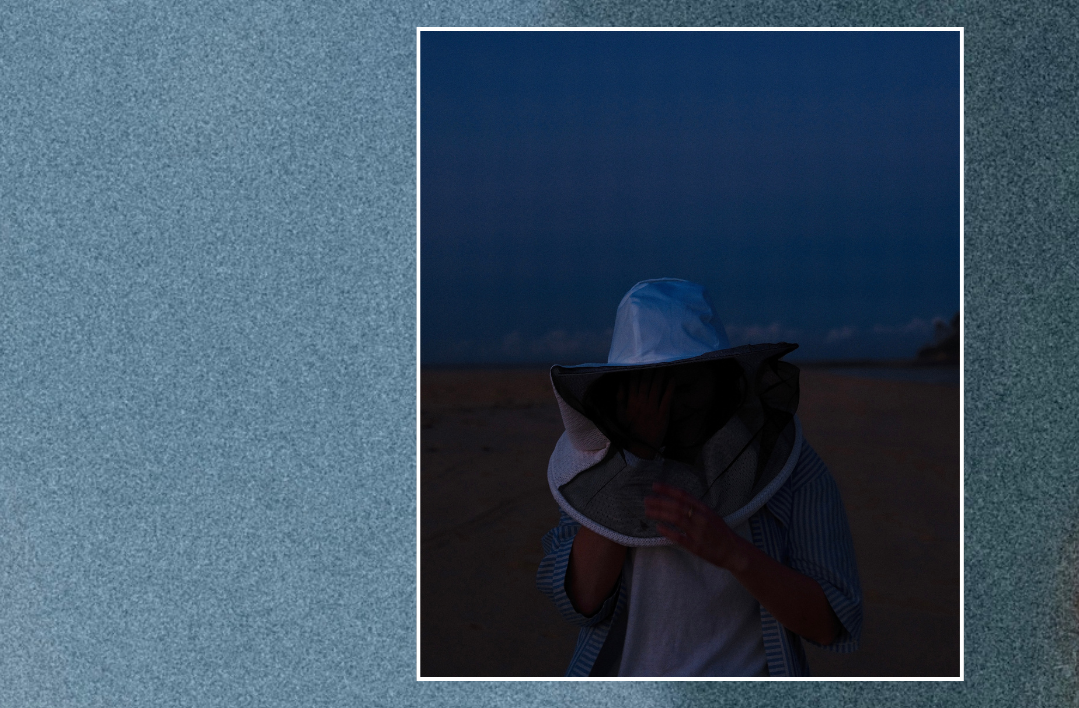
As we begin to wrap our conversation up, I ask Hana if she’s begun to consider other people’s reaction to her new work, this deeply personal and weighty concoction she’s spent years piecing together; all of that learning too.
“Honestly, I don't consider them at all,” she says, immediately. “Only because if I did, I wouldn't make music at all. I have to be not only physically alone, but also psychically alone to feel like I can express myself normally and naturally. I'm a big people pleaser, so if I was considering others at all I’d just be asking myself what every single person in any room would find that to be so conflicting that I couldn’t make anything at all.”
All of Hana’s work sings to that notion. There are times when a distinct melody takes form in front of your eyes, bringing the whole piece to glowing life, before a breeze drifts in to send it scattering out of reach once more. At other times her work just hums along in the background, almost mystical in its out-of-reachness. Time stands still; the day blushes and you find that night has suddenly arrived.
“I hope I can keep that separation. I think I've been able to so far,” Hana continues. “I also feel that ‘career’ could just die any second. And I'm very happy with that idea. I’m very happy with not being listened to. I don't need this to be a career forever. I'm so grateful for it now, but if people stop listening, because my music becomes unlistenable or whatever, then that's how it goes. And if people want to continue to listen then, well, that’s great, too.
I'm just so happy to have a creative outlet at all. I'm really, really grateful for that.”
*
Tiarn is out now, and available via Bandcamp
Hana tours the UK in September, find all of her live dates here