Belief in the beginning: An interview with Squirrel Flower

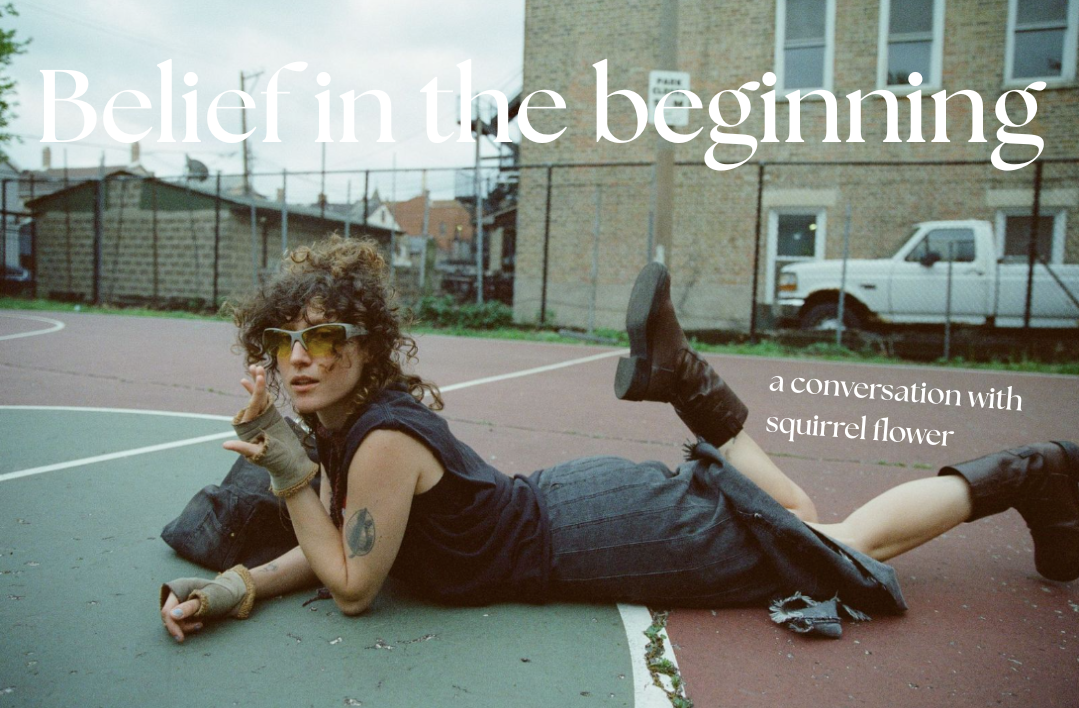
Belief in the beginning
A conversation with Squirrel Flower
words & interview by tom johnson
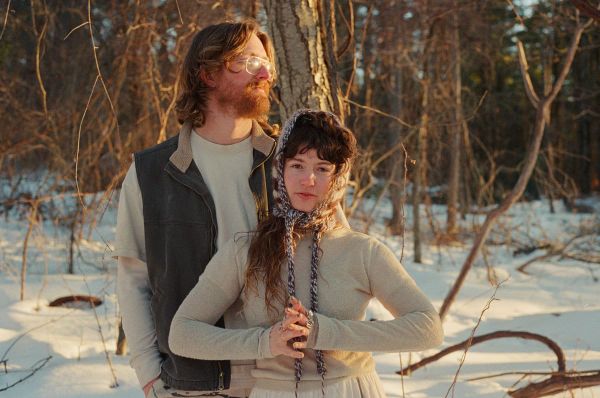
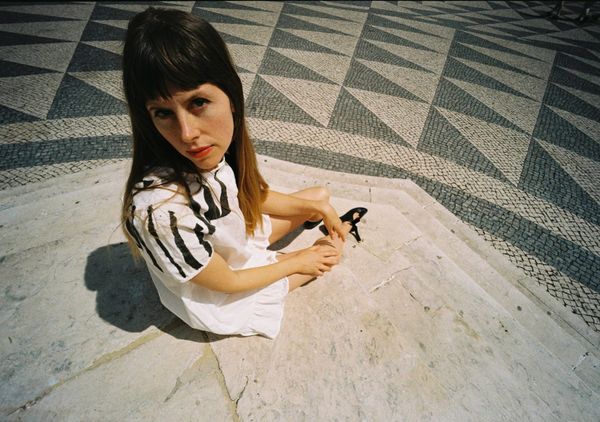
Ella O’Connor Williams is about to turn thirty, and she means to celebrate from way up high.
A couple of days ahead of this elevated occasion, she’ll gather with friends in a Chicago park to play kick-ball into the long evening, an annual birthday tradition she’s crafted for herself over recent years. When the big day arrives, however, she’s planning to hike up a mountain out in New Hampshire. “I grew up climbing those mountains and they are really meaningful to me,” she says of her plans. “It feels like a good place to turn 30; looking out on the land, being in nature far away from everything else.”
Not long after that, another big day will roll around with the release of Say a Prayer to the Gods of Getting Going, a brand new album Williams has written and released under her Squirrel Flower moniker. The eleven-song album makes for a bold and determined stride forward, the kind of record you feel Williams could only have conjured at this point in her career, in her life. At times boisterous, often decadent and wildly romantic, it sweeps and soars with the rhythm of a bare arm extended from a car window, tracing the lines of hills and telephone wires, rising to meet clouds that gather above, finding balance between it all in the long grey road that unrolls ahead.
“I feel pretty neutral about turning 30, honestly,” Williams tells me, when we talk a few days ahead of the aforementioned celebrations. “Every year that passes I become more myself and more steadfast in my life path, and also more steadfast in my opinion that age doesn't mean anything. The older you get, the more you’re able to be more balanced through big changes,” she continues. “I’m not having a crisis of ageing; I don’t feel any pressure to change my life or my lifestyle. I’m just hoping to have a childlike wonder forever.”
Born in Massachusetts, currently living in Chicago, Ella has been making music as Squirrel Flower – a childhood nickname she gave herself – since she was a teenager, self-releasing her debut EP in 2015 before breaking out of the local Boston scene with the Contact Sports EP, released in the winter of 2016. A deluxe edition of the EP was released in 2018, bridging the gap between its initial unveiling and Williams long-awaited debut album I Was Born Swimming, which was finally released in 2020. Her first release on Polyvinyl, the album was swiftly followed up with Planet (i) in 2021 and then again in 2023 with Tomorrow’s Fire, a record that pushed her reputation further up the ladder once more, celebrated by a number of mainstream publications in their end-of-year coverage.
"When I made the record I was untethered.
I wanted to be untethered from the music industry almost completely."
Say A Prayer, then, is the first Squirrel Flower album in three years – and in a number of ways it feels like it. Despite its moments of powerful grandeur, the bursts of cacophonous noise that heave like weather breaking, it all feels beautifully lived-in; a patience and thoroughness in what it chooses to say and not say. It feels unbound and unruly because it was born, completely deliberately, from such a thing.
“When I made the record, when I tracked the whole thing, I was untethered. I wanted to be untethered from the music industry almost completely,” Ella explains of the album’s early days, a stretch of time where she was managing herself and out of contract with her label. “I knew I wanted to make this record and have the music completely done before sending it to anyone in the industry. That was really important to me,” she says.
It wasn’t a distrust in people that brought on this outlook. After releasing three albums in four years, Ella just needed a break from the mechanics of the industry, to step away from the revolving doors and spend valuable time alone with her craft. She spent a lot of that time out on the road, and some of those people and places – real and imagined – are scattered throughout the album’s eleven songs: Cleveland, Chicago, Indiana, California, and more. There are further mentions of the places in between: deserts and alleyways, gardens and mountain tops. “If I just get on my bike I’ll outride any heartache,” she sings on the album’s penultimate track ‘Surfing USA’, and it’s a mantra that ties the album’s flailing limbs to its beating heart.
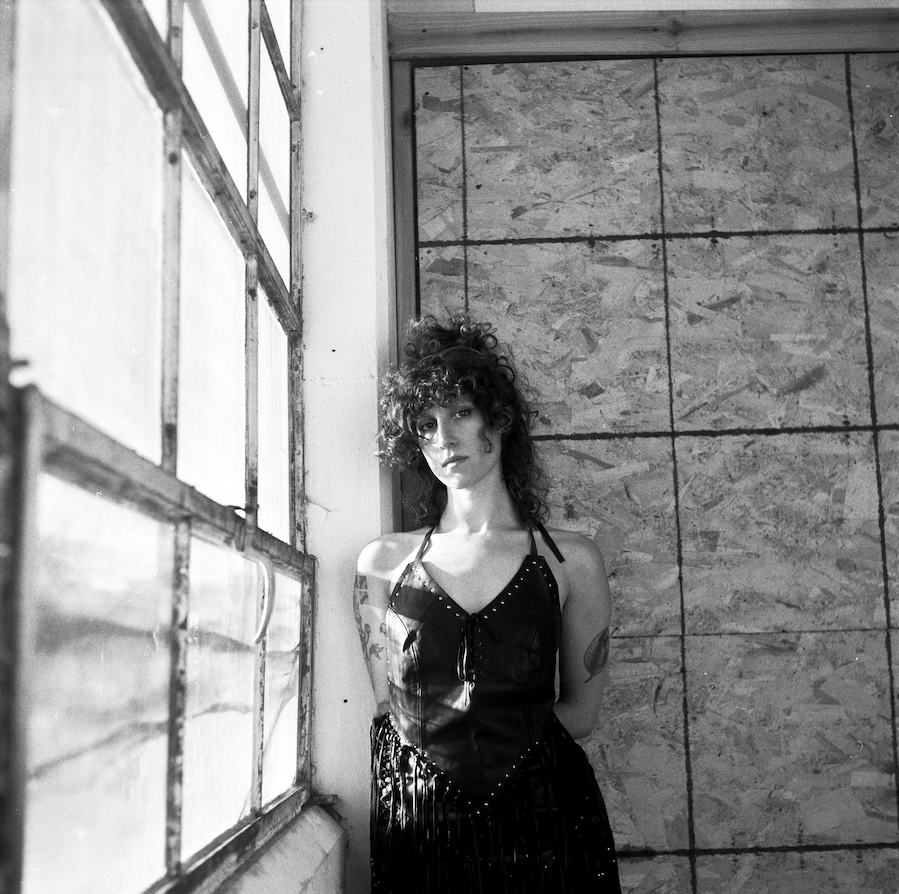
“A lot of the places I reference are not taken from periods of touring, but from periods of personal travelling I did during that break from it,” Ella says, looking back at those untethered days. “I spent a lot of 2024 and 2025 just running around the country. I’d been on the road so much up to that point, but only ever on tour. I think I got addicted to the thrill of touring – the pattern and the rhythm – and I really didn't know how to exist when not on the road. I got so good at existing on the road, that I would get back to Chicago and really not know what to do with myself.”
"Spending so much time out on the road really caused me to lose pieces of myself without even realising it."
She catered weddings as a way of seeking out structure and earning some money, but the stasis felt strange and overwhelming after long spells of constant motion. She ended up moving to LA for a month or so, staying in the empty apartment of a friend who had a small home studio setup. “I went there and started the process of more intentionally thinking about making another record,” Ella says. “I was also trying to find, or recover, different parts of myself that I lost through touring. Spending so much time out on the road, and also managing and tour managing myself while performing, really caused me to lose pieces of myself without even realising it.”
Flashes of this travel, this seeking for something beyond, ripple through Say A Prayer. You can feel the propulsion in its bones; the wide-eyed snapshots born of exploration are a constant presence across the album.
It all starts in paralysis, though. The album’s scorched title-track opens the record, Ella’s voice wrapped up inside a swirling heave of guitar feedback: “Open desert, open can. On the corner. I don't have anything to say today man,” she sings as the album’s very first words. “Lately nothing’s been going my way.”
Perhaps it had to start there, in spite of all the miles it goes on to cover. Sometimes the wheels of life slow down so much that all there’s left to do is shake yourself to moving.
So off she went, bouncing around the country, from California then out through Vermont, down to New Mexico and beyond. She traveled and wrote and sought out community, staying with friends and brushing with strangers, never in one place for more than a month before packing up and moving on once more. It’s no surprise that the album veers between this movement while also aching with flickers of domesticity, the yearning for, the appreciation of that peculiar four-letter word: home.
“That’s the constant tension in my life. I often have the desire for something more stable but it tends to lead me to feeling very caged in,” Ella says of that push and pull. “For most of this year I’ve been living in other people’s spaces, subletting, or living in a guest room, and it’s felt really good. It offers me momentary stability in a beautiful domestic realm, without having to commit to it long-term. That’s working out really well for me right now. I’m thinking a lot about ageing,” she continues, “and how to age into a more alternative lifestyle, and how to make things sustainable. These are the tensions that are playing in my head a lot.”
Ella announced this new chapter with ‘Reelin’, a striking, audacious piece of music that plays with this tension throughout its brief runtime. “When I’m 30 I’m gonna have a husband,” she sings in the song’s mid-section, her voice crawling over an aching, underlying accordion. “And a garden, and a plan, and good intentions, and good credit, ‘Til bad things call me back again.”
“That lyric is more sarcastic, but it does come from that tension,” Ella says of the song. “I came to the end of an artist residency in New Mexico and drove all the way from there to Massachusetts, to spend the holiday with my parents. When I got there I had an overdue highway toll bill that had been mailed to their address, because I didn't have a permanent address. It should have been a dollar, initially, but it had racked up all of these late fees so by the time I got to Massachusetts it was a 100 bucks,” she laughs. “I remember seeing that and just thinking ‘Oh my God, like, what is the state of my life?’. It felt so indicative of everything.”
Such friction has been found at the heart of Squirrel Flower’s music from its outset. Right now she sits on the cusp of thirty, and it’s been almost a full ten years since we first covered her work here on GFP. For that reason alone it makes sense that it’s been such a prominent and recurring theme; what are your twenties for if not seeking out your place in the world and rebelling against the one expected of you?
“I think it’s something that is really central to my spirit. It's a big part of who I am so it’s often come out in my music,” Ella elaborates. “I think a lot about ‘The American Dream’ and how unattainable it is for so many people. It’s fucked up that it happens at the expense of so many other people, and yet I still see so many of my peers desiring that more traditional and stable way of life. Maybe it's because people are so scared of climate change, and the constant feeling that the world is ending, that they need to find some kind of normalcy,” she continues. “I don't know. I say this all with no judgement in my heart. It's just something I've noticed, and I find it surprising as someone who doesn't necessarily have that drive yet.”
"I really think that making art that's true to you, and sharing it with people, is a way of living forever."
All of these scattered strands are finally gathered up on ‘Highway Woman’, a striking piece of music that sits at the album’s heart. Place names roll off the tongue while a form of magic dances at the edges, in the margins, ambiguous but full of life. “Highway woman, pack your knife and your guitar,” Ella sings as the loose instrumentation, free of drums, of that totemic swagger, quietly hovers around her. “You can change it as you go. You don’t plan on dying.”
“I’ve been thinking a lot about immortality through art, and I really think that being an artist, making art that is true to you and sharing it with people, is a way of living forever,” Ella reflects. She recalls a time when she was in the UK to make her second record and was reading books she’d recently discovered, written by her great-grandfather. “The process of reading those books was really special to me, because it felt like I was getting to know a person I had never met,” Ella explains. “I've been thinking about that lately in the context of my music, and my art, and the legacy that we leave behind. When I'm gone, the art will still exist, and there are pieces of my soul in it. I think that's a form of immortality.”
“That's part of what I’m singing to [on American Highway],” she continues. “Another part of it is the feeling that if you continue to honour your intuition, and not let yourself be hardened and jaded by ageing, or by the state of the world, then that can make you feel like you can live forever. A lot of the women in my family, and the women I look up to, embody that and remain very playful and strange. Everybody dies, of course,” she adds, “but I think by not resigning yourself to living the way you think you have to is a way of extending your life. I’ve been trying to do that by staying in constant motion.”
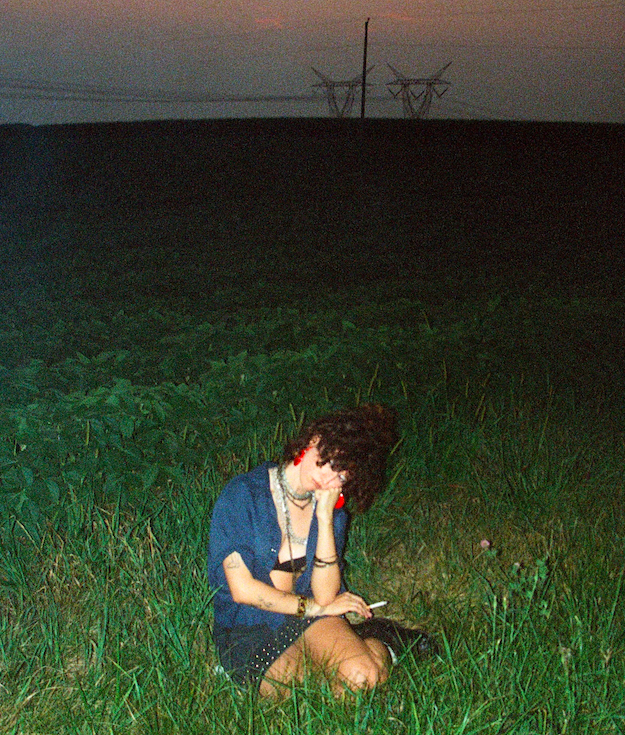
That intention extends itself to the music found on Say A Prayer. While there are plenty of quintessential Squirrel Flower moments throughout – powerful bursts of guitars rip through the fabric of a number of the songs here – the album feels shaped and personified by the space it leaves. It’s there on ‘Highway Woman’, with its landscapes laid wide open. It’s there too on ‘Reelin’, deliberately chosen as the LP’s first single because of its lack of drums (“I wanted it to be clear that I was entering a different realm with this album. That felt really exciting to me,” Ella explains), and it comes to the fore on ‘Fought A Hornet’, a remarkable song that feels like the whole record folding inside itself; an entire world inside a water drop.
This shift in tone, in the timbre of Ella’s delivery, came from a deliberate attempt to capture something timeless. Lucinda Williams, Linda Ronstadt, Stevie Nicks, and Joni Mitchell are frequently cited as influences, and their work is flames that flicker at the edges of it all. “It represents an idea that I had in terms of the production and recording of the record,” Ella says of that desire for timelessness.
“I was listening to a lot of music from the 60s and 70s when writing the album, and I was really drawn to the fact that you couldn't hear the studio in the recordings. You couldn't hear any markings of the modern age. In a lot of contemporary music you can hear the digital processing,” she continues, “and it almost feels like you're listening to the sound of the studio as opposed to the sound of the music. I really wanted to make a record that sounded like the music; something difficult to date.”
Much of that feeling, as feelings tend to do, comes from and through the voice. Whether weightless and unadorned, or carrying the heft of the instrumentation that billows around it, Ella’s delivery is a mesmerising part of what makes Say A Prayer quite so impactful.
“Sonically I was very inspired by vocalists that make you feel like you’re inside their voice; when it’s captured in a way that’s so dimensional,” Ella explains. “Partially that came from listening to all of those musicians I mentioned before, but also from a feeling I had that there isn’t a lot of contemporary music that really achieves it. The voice is an intimate, vulnerable, unique thing. It's such a personal instrument, and I really wanted to be more intentional about showcasing all the different sides of it. And not be afraid to show the strangeness of a voice, and not have it feel processed or homogenised at all.”
Much of this side of the work was made with, and pushed by, Alex Farrar, the Asheville-based producer who Ella worked with on Tomorrow’s Fire, and has made a name for himself with recent work for the likes of Wednesday, MJ Lenderman, Waxahatchee and more. Ella traveled south having begun making the record in Wisconsin, alongside Chicago friends including the album’s co-producer Seth Engel. Expecting Alex to push these initial workings back towards the more full-bodied nature of their previous collaborative work, Ella soon found the opposite to be true.
“I really thought Alex would guide me back to a more explosive guitar sound,” Ella says of the process, “but he actually, and really emphatically, pushed me into stripping things back even more than I’d imagined. He was literally carving out space around my voice, and we began leaning into a far more spacious sound. I’d always wanted to do that, but I think felt slightly afraid to. ‘Fought A Hornet’, ‘Reelin’, the opening track, ‘Weightless, Untethered’… Every record of mine has had songs in that same sort of realm, but this the first time there’s been so many of them together. It's a scary thing to do. It's definitely an artistic risk,” she concludes.
It’s a risk that more than pays off. Say a Prayer to the Gods of Getting Going is the sixth Squirrel Flower release in a decade, the sixth that Ella has completed before her 30th birthday, but it feels more complex and more confident than ever before. On the surface, it might not sit too far outside of her established landscape to label it as a distinct new chapter, but on repeated listens it really does start to feel that way, the roots of her work formed into all new shapes and shades; a wisened, focused gaze that stirs something ambiguous and woozy in those who will spend time with.
“I start to consider the listener once the record is done,” Ella says, reflecting on the transition her new work is about to make. “I hope people listen to the record and feel a sense of seeing their own journey in it. I want to embolden people to take risks, emotional risks, in their life decisions. I hope that people can listen to the record and feel a sense of freedom, or just an emotion that they haven't felt in a while, something that they'd forgotten about. That’s what I look for in other people’s work,” she continues. “I don't like my very favourite music because of something technical, I love it because regardless of genre, or arrangement, or style, the music elicits an emotional response in me, and reminds me of things that I haven't felt since I was a child.
It reminds me of truths about myself, and that’s always my hope when I think about people listening to my work.”
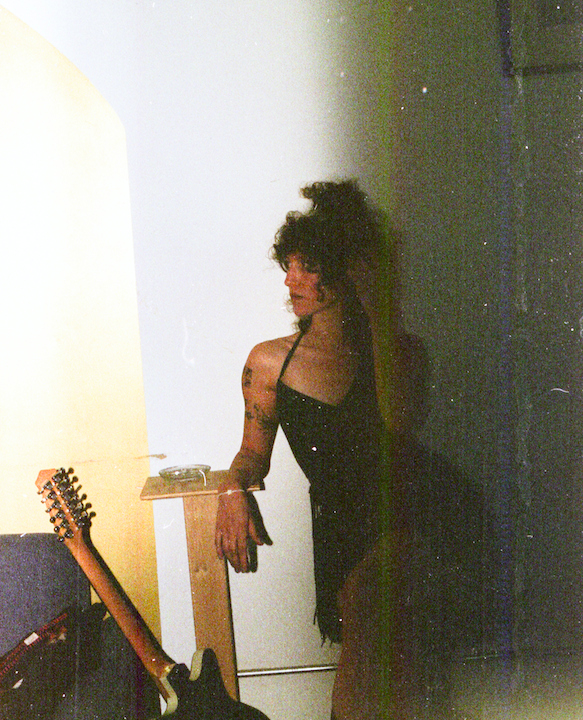
Say a Prayer to the Gods of Getting Going is out now, via Polyvinyl.
Buy/listen now via Bandcamp
~